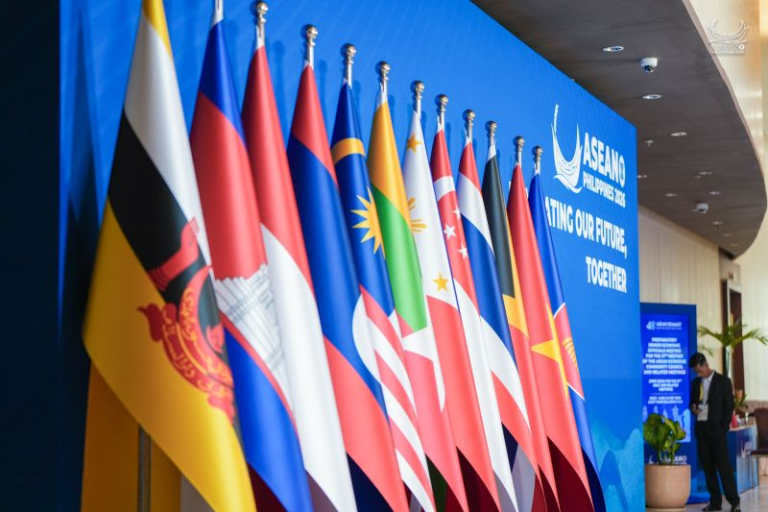
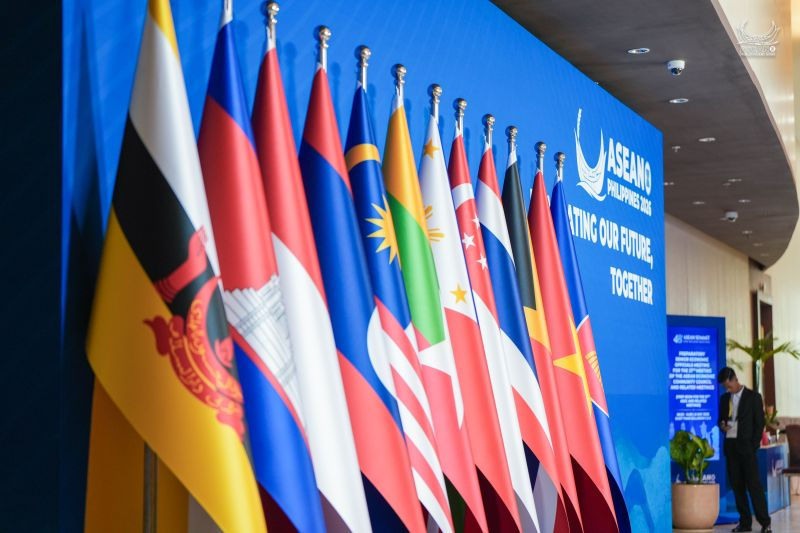
MANILA – The 59th ASEAN Foreign Ministers’ Meeting (AMM) wrapped up July 24, 2026, highlighting major discussions around territorial disputes, internal political crises, and regional security alliances. Top diplomats in the Philippine capital, among others, reported progress in ongoing negotiations with Beijing as they reaffirmed an ambitious target to finalize a legally binding Code of Conduct (COC) by the end of 2026
The Association of Southeast Asian Nations (ASEAN) and China are making “good progress” on the negotiations of a code of conduct (COC) in the South China Sea, said Philippine Foreign Secretary Ma. Theresa Lazaro.
Lazaro said all parties still intend to finish the code “within the year” against the backdrop of recent developments in the South China Sea, Philippine news agency (PNA) reported at the end of the summit.
“ASEAN now and China (are) geared towards the conclusion – hopefully the conclusion – of the code of conduct by the end of this year. “And this seems to be the focus of many of the countries, and I can see some political will from all the countries involved,” she said in a press conference.
Negotiators are hastening talks through monthly in-person meetings to resolve four key “milestone issues” in the COC draft.
These include establishing the connection between the COC and the non-binding ASEAN Declaration of Conduct (DOC) on the South China Sea; determining whether the final document is legally binding or not; the geographical scope; and the definition of terms, such as self-restraint.
“If we see it from our point of view as the progress being made, the terms of reference is very important – let’s say (the definition of) self-restraint, now, there’s been some kind of consensus, a growing consensus, and that’s, for us, good progress,” Lazaro said.
The foreign ministers of ASEAN, China, and several major powers, including the United States, Australia, and Japan met in Manila for the 59th ASEAN Foreign Ministers’ Meeting and Related Meetings. The bloc review progress across ASEAN’s three community pillars, evaluate external relations, and exchange views on pressing international issues.
As current chair of ASEAN, the Philippines lead critical discussions on regional security, human rights, and geopolitical stability as it hosts the 59th ASEAN Foreign Ministers’ Meeting (AMM) and Related Meetings from July 20 to 24.
These included Post-Ministerial Conferences (PMCs) with key dialogue partners, including India, the United States, Canada, Russia, China, the Republic of Korea, Japan, Australia, New Zealand, the United Kingdom, and the European Union.
Also held were the 27th ASEAN Plus Three (APT) meeting, the 33rd ASEAN Regional Forum (ARF), and the 16th East Asia Summit (EAS).
Regional ministers convened for the Southeast Asia Nuclear Weapon-Free Zone (SEANWFZ) Commission meeting to review the 2023–2027 plan of action and deliberate on the accession of new candidate states to its Protocol. The grouping’s longstanding objective remains securing global recognition and support for keeping Southeast Asia entirely free of nuclear arms.–GDA
About the Author